
Researchers at King’s College London have developed a new “companion drug,” KCL-HO-1i, designed to make chemotherapy more effective by dismantling the immune barriers that protect tumours.
Tumours recruit immune cells called macrophages and prompt them to produce an enzyme, HO-1, which blocks cancer-killing T cells from entering the tumour. This prevents chemotherapy from fully activating the immune response needed for the best outcomes.
KCL-HO-1i inhibits HO-1, allowing T cells to reach the tumour and work alongside chemotherapy. In mouse studies, the drug made previously chemotherapy-resistant tumours vulnerable.
The treatment is the result of over a decade of research into tumour-associated macrophages. The team discovered that macrophages mistakenly treat tumours like wounds and create protective barriers, due to evolutionary programming. Blocking HO-1 effectively “rewires” the tumour environment so the immune system can recognise and attack the cancer.
Developed by James Arnold, James Spicer and Miraz Rahman, the new drug can be taken as a daily pill at home. The researchers have formed Aethox Therapeutics to advance the drug toward clinical trials, which they hope to begin within two years. Ultimately, KCL-HO-1i could be paired with many types of chemotherapy to improve patient responses and perhaps allow for gentler treatment regimens.
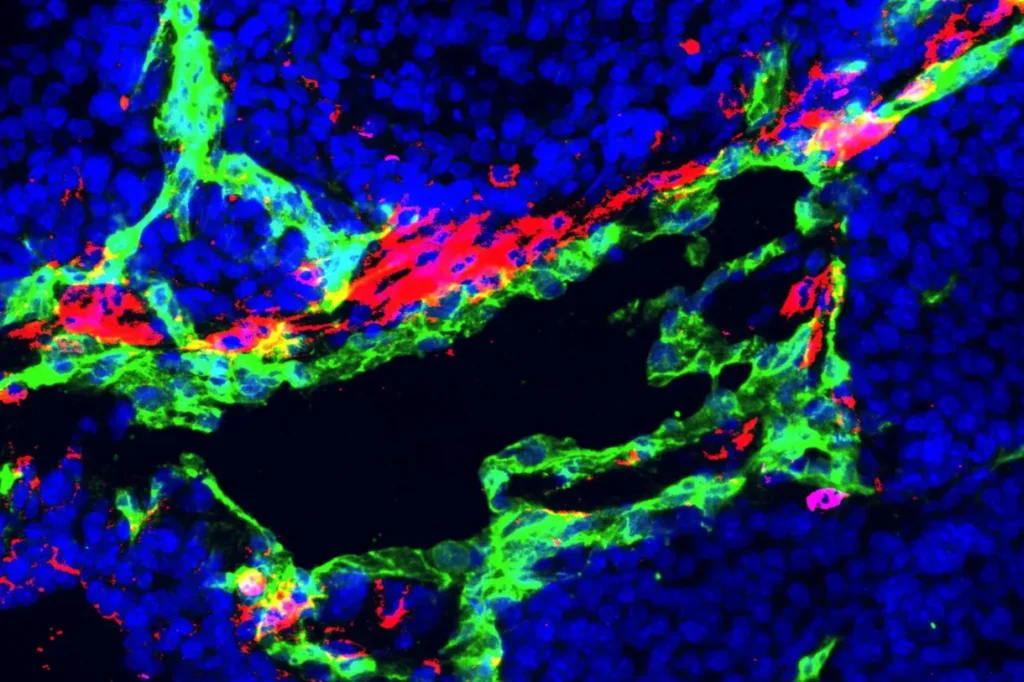
In this microscopic image of a tumour sample, macrophages (red) are clustering near blood
vessels (green) to keep cancer-fighting T cells out of tumour tissue.
Many of the blue cells in this image are cancer cells. There are small pockets of T cells highlighted in magenta.
Copyright: Cancer Research
Credit: Tim Gunn